From its pioneering debut to its current futuristic form, the Toyota Prius has consistently redefined what a mainstream hybrid vehicle can be. As the world's first mass-produced hybrid, it carved a niche for fuel efficiency and environmental consciousness, arriving on American shores as a 2001 model year vehicle in 2000. Over two decades, it has evolved through distinct generations, each pushing boundaries in design, technology, and performance while staying true to its core mission.
Join us as we chart the remarkable journey of the Prius, exploring the significant milestones and transformations that have shaped this iconic car, generation by generation, focusing on the models that captivated the United States.
The Genesis of Green: First Generation Toyota Prius (2001-2003)
The journey began with the 2001 model year, introducing the first-generation Prius (codenamed XW10, and later NHW11 for international markets). This sedan quietly yet profoundly launched the hybrid revolution in North America. It combined a modest 1.5L four-cylinder gasoline engine with an electric motor, seamlessly managed by a continuously variable transmission (CVT).
American models enjoyed a slight power advantage over their Asian counterparts and came standard with air conditioning, making them well-suited for the US market. Its somewhat unassuming sedan shape belied the revolutionary powertrain humming beneath. For a deeper look at its foundational impact and specifications, our First Generation Prius overview Explore the early days of hybrid motoring.
Redefining the Hybrid: Second Generation Toyota Prius (2004-2009)
The Prius truly hit its stride with the second generation (XW20), arriving for the 2004 model year. This redesign was a game-changer, ditching the traditional sedan shape for a distinctive five-door liftback design that instantly became synonymous with "hybrid." The new silhouette improved aerodynamics and practicality, offering generous cargo space.
Under the hood, it retained a 1.5L inline four-cylinder engine paired with an electric motor, now delivering a combined 110 hp, still driving the front wheels through a CVT. The 2006-2009 models received a subtle facelift, refining the front grille and exterior lights, while practical features like a rearview backup camera and side curtain airbags became standard. To truly Dive deep into the XW20 Prius and understand its enduring popularity, explore its dedicated analysis.
Maturing into the Mainstream: Third Generation Toyota Prius (2010-2015)
The third-generation Prius (XW30), launched for the 2010 model year, ushered in a new era of refinement and power. It featured a full redesign that evolved the distinctive liftback shape, making it sleeker and more aerodynamic. This generation also marked a significant powertrain upgrade.
The previous 1.5L engine was replaced by a more robust 1.8L unit, boosting the total system output to 134 hp, all managed by the familiar CVT automatic. These changes made the Prius feel more capable on the highway without sacrificing its legendary fuel efficiency. A refresh for the 2012-2015 models introduced a new front fascia and updated alloy wheel designs, further modernizing its appearance. For a Comprehensive Prius XW30 analysis and its role in solidifying Toyota's hybrid dominance, delve into its features.
Bold Strokes and New Horizons: Fourth Generation Toyota Prius (2016-2022)
The 2016 model year brought the fourth-generation Prius (XW50), arguably the most visually polarizing iteration. Its redesign introduced an edgier, more dramatic aesthetic with sharp lines and distinct, insect-like headlights that truly divided opinions. However, beyond the controversial styling, this generation offered tangible improvements: a better driving position, more spacious cabin, and an even larger trunk.
While the powertrain was similar to its predecessor, its power was rerated to 121 hp, emphasizing efficiency. The 2019-2022 facelift toned down some of the more divisive exterior features and, most notably, introduced a highly anticipated AWD drivetrain option. A larger infotainment screen, first seen in the Prius Prime, also became available. To Read our Fourth Gen Prius review and evaluate its impact, check out its detailed breakdown.
A Sporty Rebirth: Fifth Generation Toyota Prius (2023-Now)
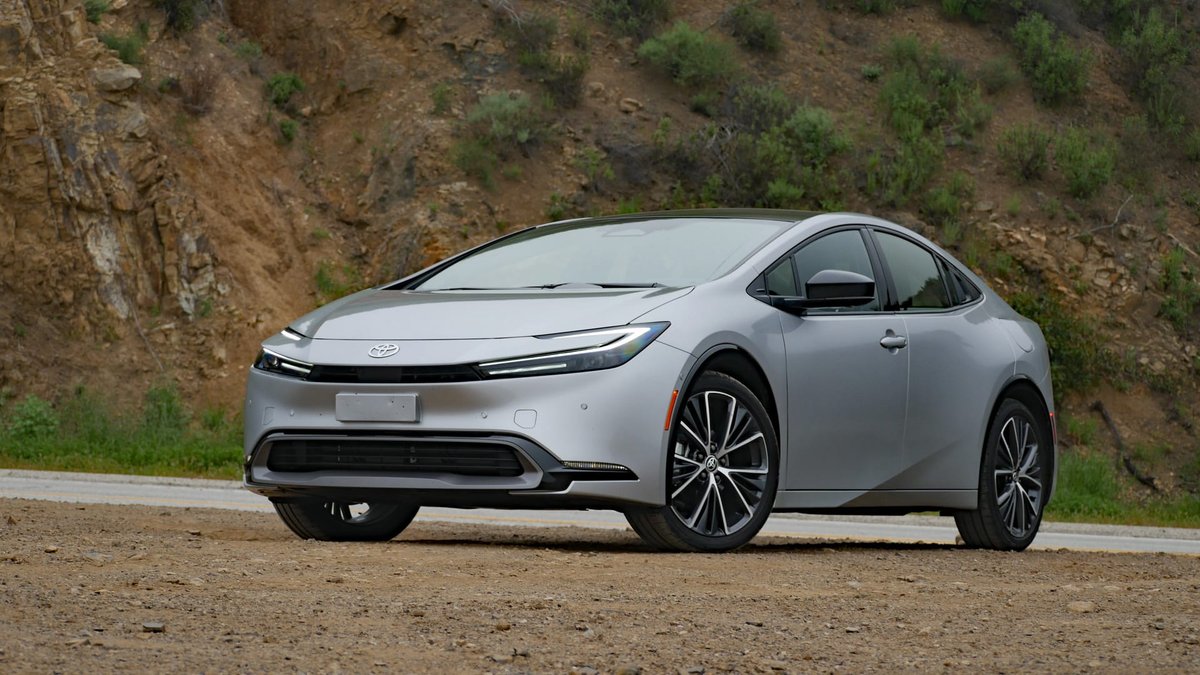
The latest chapter in the Prius saga began with the fifth generation (XW60), which debuted in 2022. This generation represents a radical transformation, shedding previous design conventions for a strikingly sporty and low-profile body that looks far more dynamic than any Prius before it. The interior received a similar overhaul, featuring a new steering wheel, a digital instrument cluster, and a wider touchscreen infotainment system that feels thoroughly modern.
Performance also saw a significant boost with a new, larger 2.0L inline four-cylinder engine. This potent setup delivers up to 196 hp in the hybrid variant and an impressive 220 hp in the plug-in hybrid (PHEV) version, making it the most powerful Prius to date. All-wheel drive also made a welcome return as an available option, enhancing its versatility. For a detailed Fifth Gen Prius XW60 outlook Explore its features and what it means for the future of hybrid cars.
The Toyota Prius has consistently demonstrated that efficiency doesn't have to mean compromise. From its humble beginnings as a pioneering hybrid sedan to its current form as a sleek, powerful, and technologically advanced liftback, each generation has built upon the last, pushing the boundaries of what a fuel-efficient vehicle can be. As it continues to evolve, the Prius remains a testament to Toyota's commitment to sustainable mobility, proving that an eco-conscious car can also be a desirable one.