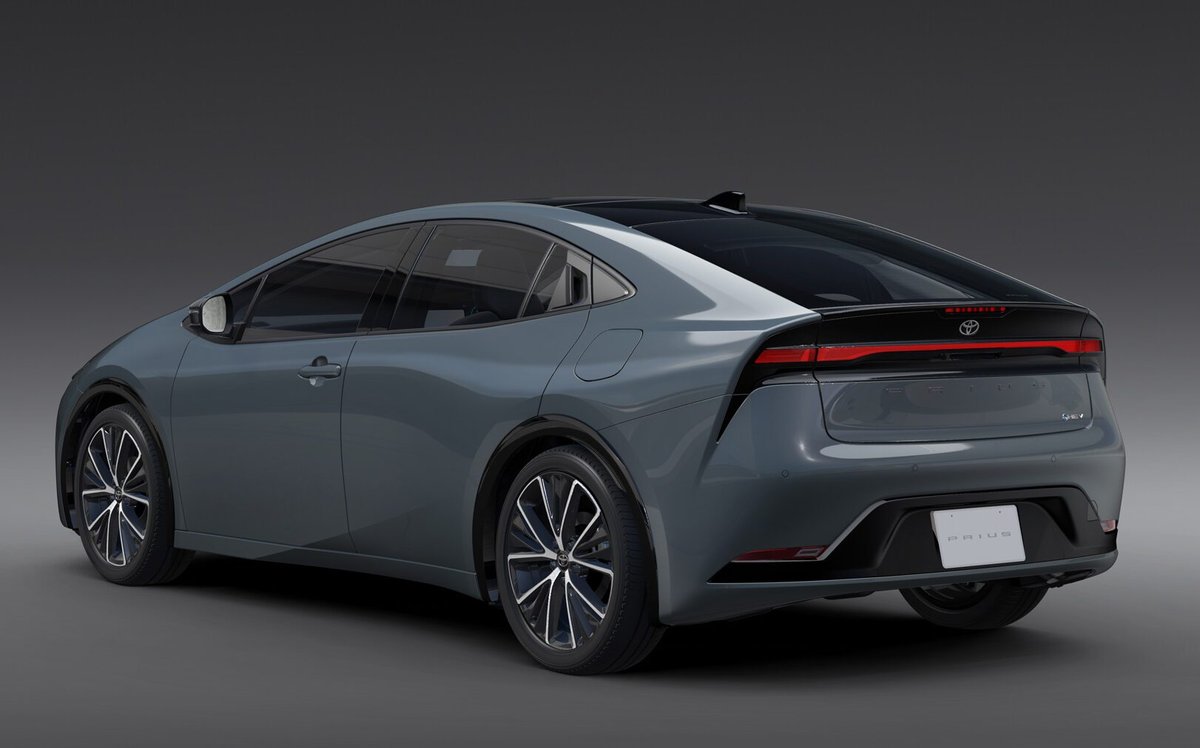
The automotive world changed forever in 1997, and at the heart of that transformation was a quiet, unassuming sedan: the First Generation Toyota Prius (XW10). This vehicle wasn't just another car; it was a declaration, a bold stride into an uncertain future powered by a then-revolutionary hybrid engine. Decades later, its influence is undeniable, setting the stage for the electrified vehicles that dominate today's headlines.
Before the sleek lines of modern EVs or the widespread adoption of hybrid tech, there was the XW10 – a compact car born from a radical vision at Toyota to create a more environmentally conscious vehicle. It wasn't perfect, but it was first, and that makes all the difference.
At a Glance: The First-Gen Prius (XW10) Essentials
- Pioneer Status: The world's first mass-produced hybrid vehicle, launching two years ahead of competitors.
- Production Span: Produced in Japan from 1997 to 2003.
- Key Models: Divided into the NHW10 (Japan-exclusive) and NHW11 (international markets, introduced 2000).
- Total Sales: Approximately 123,000 units of the first generation were sold worldwide.
- Underpinning: The first vehicle to be based on the robust Toyota MC platform.
- Core Technology: A 1.5-liter Atkinson cycle gasoline engine paired with a permanent magnet AC electric motor and a Nickel-Metal Hydride (Ni-MH) battery pack.
- Name Origin: "Prius" is Latin for "prior" or "before," signifying its role as the predecessor of future cars.
- Environmental Leader: Classified as a Super Ultra Low Emission Vehicle (SULEV) by the California Air Resources Board (CARB).
A Vision Takes Shape: The Genesis of Hybrid Technology
The story of the Prius isn't just about engineering; it's about foresight. Toyota’s commitment to environmental stewardship began formally with the "Earth Charter," announced on January 16, 1992. This document wasn't merely corporate jargon; it outlined ambitious goals to develop and market low-emission vehicles, signaling a seismic shift in the company's long-term strategy.
By September 1993, this vision gained concrete form with the establishment of the G21 committee, spearheaded by Toyota R&D Executive Vice President Yoshirio Kimbara. G21's mandate was clear: research and develop cars for the 21st century. Its first official meeting in February 1994 set a towering objective—to create a vehicle that was both resource and environmentally friendly, yet still offered all the benefits and convenience of modern cars. This challenging development effort fell to Takehisa Yaegashi, tasked with bridging the significant gap between traditional gasoline engines and nascent electric vehicle technology.
Toyota executive Takeshi Uchiyamada was also instrumental, leading the charge to create a car that was simultaneously fuel-efficient and environmentally benign. The G21 team swiftly moved from concept to reality, designing a hybrid-engined prototype for the 1995 Tokyo Motor Show. They christened it "Prius," a Latin word meaning "prior" or "before." Toyota’s spokesperson later clarified this choice, stating that "Toyota chose this name because the Prius vehicle is the predecessor of cars to come." On October 27, 1995, the world got its first glimpse of what the future might hold.
Engineering a Revolution: Overcoming Early Hurdles
Bringing a groundbreaking concept car to mass production in just three years was an immense challenge, especially for a technology as complex and unproven as a gasoline-electric hybrid. The engineering team reviewed over 100 hybrid designs before ultimately settling on a continuously variable transmission (CVT) system, a decision that would prove foundational to the Prius's operation. This sophisticated transmission allowed for seamless power delivery from both the gasoline engine and electric motor.
One of the most significant hurdles was the longevity of the battery pack. Early electric vehicle attempts had often been hampered by short battery lifespans, but Toyota aimed for a battery that would last between 7 and 10 years, matching the general lifespan of other car components. The brilliant solution engineers devised was to meticulously manage the battery's state of charge, keeping it consistently between 40% and 60%. This "sweet spot" proved crucial, dramatically extending the battery's life to roughly that of the rest of the vehicle, a testament to clever system design.
To handle the fluctuating, high voltages between the battery and the electric motor, Toyota even borrowed technology from its high-speed rail division. The semiconductor core inverter unit was modeled on the heavy-duty transistors used in Japan's Shinkansen bullet train, showcasing the extreme measures taken to ensure reliability and performance in this innovative new powertrain. Test driving commenced in late 1996, pushing the limits of this nascent technology. Despite the monumental challenges, the team barely met their aggressive deadline, rolling the first production NHW10 Prius off the assembly line in December 1997.
The NHW10: Japan's Exclusive Pioneer (1997-2000)
The very first iteration of the Prius, model NHW10, went on sale exclusively in Japan on December 10, 1997. Manufactured initially at the Takaoka plant (later moving to the Motomachi plant in Toyota City, Aichi), it quickly became a symbol of Toyota's environmental ambitions. Its distinctive styling, notably, originated from California designers, who won out over competing proposals from other Toyota design studios worldwide, reflecting a global outlook even in its initial market phase.
At its launch, the NHW10 Prius proudly claimed the title of the world's first mass-produced gasoline-electric hybrid car. Toyota's initial sales target was ambitious yet cautious: 12,000 units annually, priced at approximately US$16,929. The introduction wasn't just about selling a car; it was Toyota's public declaration of a new generation of "green" vehicles, aimed at curbing air pollution and significantly boosting fuel efficiency. Toyota even optimistically forecasted that hybrids would capture a third of the global auto market by as early as 2005.
However, the NHW10 wasn't without its quirks. Engineer testing uncovered a vulnerability: reduced performance in hotter climates and at higher altitudes. To address this, early models featured a rather charming, yet serious, instrument-panel indicator: a turtle-shaped warning light that would illuminate if the hybrid system was in danger of shutting down due to stress. This unique gauge, a small visual detail, highlighted the pioneering nature of the technology and the learning curve involved. While primarily a Japan-only model, some NHW10s were privately imported into countries like the UK, Australia, and New Zealand, often as second-hand vehicles. Notably, these "grey imports" in New Zealand occasionally reported high voltage battery failures, a problem not supported by official distributors outside Japan, serving as a reminder of the complexities of early hybrid ownership across different markets.
The NHW11: A Hybrid Goes Global (2000-2003)
Recognizing the potential beyond Japan, Toyota prepared a more robust version for worldwide markets. The NHW11 Prius was introduced globally in September 2000, reaching the United States market as a 2001 model year vehicle. This international version was specifically engineered to satisfy the demands of higher speeds and longer distances common in places like North America, boasting more power and standard equipment like air conditioning.
The NHW11 was powered by a 1.5-liter Atkinson cycle four-cylinder gasoline engine, producing 70 hp (52 kW) and 82 ft⋅lbf (111 N⋅m) of torque. This was complemented by a permanent magnet AC electric motor generating a maximum of 44 hp (33 kW) and a substantial 258 ft⋅lbf (350 N⋅m) of torque. Energy storage came from a nickel-metal hydride (Ni-Mh) battery pack, rated at 1.78 kWh (273.6 V; 6.5 Ah). The combination provided a compelling blend of power for its class and groundbreaking efficiency.
In the United States, the NHW11 became the first Prius sold, positioned strategically between the smaller Echo and the larger Corolla. It was the second mass-produced hybrid on the American market, following the two-seat Honda Insight, but the Prius offered the advantage of seating five, albeit with some cargo space limitations due to the battery pack. The retail price for the US market was set at a competitive US$19,995.
The interior of the NHW11 was distinctly futuristic for its time, featuring a dash-mounted shift lever and a small touchscreen display. This screen wasn't just for entertainment; it offered a fascinating, real-time hybrid powertrain display, illustrating the interplay between the gasoline engine, battery pack, and electric motors. It could also show a bar-graph of fuel economy results, empowering drivers with immediate feedback on their efficiency—a feature that became iconic for the Prius.
The NHW11 quickly garnered recognition for its environmental credentials. The California Air Resources Board (CARB) classified it as a Super Ultra Low Emission Vehicle (SULEV), a testament to its significantly reduced emissions. Furthermore, at one point, Prius owners in the US were eligible for up to a US$2,000 tax deduction from their gross income, sweetening the deal for early adopters. Unlike the initial NHW10, Toyota executives confirmed that the company eventually broke even financially on sales of the NHW11 Prius, a critical milestone for a revolutionary technology.
European sales commenced in September 2000, and Australia saw its official launch in 2001 after the Sydney Motor Show, although sales were initially modest until the subsequent NHW20 model arrived. The XW10 had truly globalized the hybrid concept.
Understanding the XW10's Powertrain: Toyota Hybrid System (THS)
At the heart of the first-generation Prius, and indeed all subsequent Toyota hybrids, was the innovative Toyota Hybrid System (THS). This was a "series-parallel" or "full" hybrid system, meaning it could operate on the electric motor alone, the gasoline engine alone, or a combination of both.
Here’s a simplified breakdown:
- Power Split Device: A planetary gear set, often considered the "brain" of the THS, seamlessly blends power from the gasoline engine and the main electric motor/generator (MG2) to drive the wheels. It also diverts power to a second electric motor/generator (MG1) to charge the battery or start the gasoline engine.
- 1.5L Atkinson Cycle Engine: This gasoline engine was specifically designed for efficiency. The Atkinson cycle improves fuel economy by increasing the expansion ratio relative to the compression ratio, though it typically sacrifices some power density compared to a traditional Otto cycle engine. This trade-off was acceptable given the electric motor's ability to provide torque fill.
- Electric Motors (MG1 & MG2): The XW10 had two motor-generators. MG2 was the primary drive motor, directly providing torque to the wheels. MG1 primarily functioned as a generator to charge the battery and also started the gasoline engine.
- Nickel-Metal Hydride (Ni-MH) Battery: This robust battery pack stored the electrical energy. Its relatively small capacity (1.78 kWh) highlights the hybrid philosophy: use a small battery for rapid charge/discharge cycles and assist the gasoline engine, rather than relying solely on electric power for extended range.
- Inverter: Crucial for converting the DC current from the battery into AC current for the electric motors (and vice-versa for regenerative braking), the inverter unit was, as mentioned, inspired by bullet train technology, ensuring reliability and efficient power management.
This complex interplay, managed by sophisticated electronic control units, allowed the Prius to achieve remarkable fuel economy and low emissions for its era, effectively redefining what was possible in a production vehicle.
Real-World Performance and Efficiency
The XW10 Prius wasn't built for blistering acceleration, but for groundbreaking efficiency. Its published fuel economy figures, especially under early testing standards, were impressive. The US Environmental Protection Agency (EPA) test results, which must be posted on new vehicle windows, provided the official benchmark.
For the 2001-2003 model years, based on the original pre-2008 EPA testing procedures, the Prius boasted:
- City: 42 MPG (miles per gallon)
- Highway: 41 MPG
- Combined: 41 MPG
It's important to note that the EPA restructured its fuel economy tests in 2008 to better reflect real-world driving conditions. Under these revised procedures, the figures for the 2001-2003 Prius were adjusted to: - City: 32 MPG
- Highway: 30 MPG
- Combined: 31 MPG
Even with the more stringent testing, these numbers represented a significant leap forward in fuel efficiency for a five-passenger vehicle. Coupled with its Super Ultra Low Emission Vehicle (SULEV) classification by CARB, the Prius solidified its reputation as an environmentally conscious choice, long before "green" cars became mainstream.
Living with a First-Gen Prius: What to Know
Owning a pioneering vehicle like the XW10 Prius comes with a unique set of considerations, especially as these cars age.
- Recalls: Toyota proactively addressed certain issues. In 2006, approximately 8,500 2001 and 2002 model year Prius vehicles were recalled due to an incorrectly manufactured crankshaft position sensor. Later, in 2009, following an investigation by the California Air Resources Board, Toyota extended a nationwide campaign for 2001–2003 Prius owners to fix starting problems caused by an improperly working throttle body leading to electronic control module (ECM) malfunction. If you're considering an XW10, it's wise to check if these recalls were addressed.
- Battery Longevity: While Toyota's ingenious 40-60% charge strategy significantly extended battery life, Ni-MH batteries do degrade over time. After 15-20+ years, the original hybrid battery pack may require replacement. The cost of a replacement battery can be a significant factor in maintaining an older Prius, although aftermarket and reconditioned options have become more available over the years.
- Grey Imports (NHW10): As mentioned, NHW10 models privately imported outside Japan can pose unique challenges. Official Toyota distributors outside Japan typically do not support these vehicles, making it difficult to source parts or receive expert service for specialized hybrid components, particularly the high voltage battery. This is a critical point for anyone considering buying an imported NHW10.
- Maintain the Hybrid System: Regular maintenance, including attention to the inverter cooling system and hybrid battery cooling fan, is crucial for extending the life of the hybrid components. Just like any car, consistent care prevents larger issues down the road.
The XW10's Enduring Legacy: More Than Just a Car
The First Generation Toyota Prius (XW10) was far more than a niche vehicle; it was a watershed moment in automotive history. It proved that mass-produced hybrid technology was not only feasible but could also be reliable, efficient, and, crucially, marketable. Toyota's gamble paid off, establishing the company as a leader in environmentally friendly transportation and permanently altering the trajectory of the automotive industry.
The XW10 paved the way for every hybrid, plug-in hybrid, and electric vehicle that followed. It normalized the idea of a car that could silently run on electricity, shut off its engine at stops, and regenerate energy during braking. These concepts, once revolutionary, are now commonplace. The Prius brand itself became synonymous with fuel efficiency and environmental consciousness, growing into one of the most recognized vehicle nameplates globally. To truly appreciate how far automotive technology has come, it's essential to look back at this foundational vehicle. You can Explore Prius generations to see how this pioneering spirit evolved over the years.
Beyond the Pavement: What the XW10 Taught Us
The First Generation Toyota Prius stands as a powerful testament to innovation and perseverance. It taught the industry, and indeed the world, that a different kind of car was not only possible but desirable. For enthusiasts, collectors, or even those simply curious about automotive history, the XW10 offers a tangible connection to a pivotal moment. It’s a reminder that even the most revolutionary ideas start somewhere, often with a compact, subtly styled car that quietly changed everything. If you ever have the chance to drive one, you'll be experiencing a piece of history that continues to influence the roads we drive on today.