Remember when the Toyota Prius was synonymous with... well, "sensible"? For many, the iconic hybrid conjured images of understated efficiency, not head-turning design or spirited driving. But times, and the Prius, have changed dramatically. The latest generations have redefined what a hybrid can be, blending remarkable fuel economy with genuine desirability. With decades of innovation under its belt, comparing Toyota Prius generations: features, fuel economy, and design can feel like deciphering a complex evolutionary tree. Don't worry, we're here to help you navigate its fascinating evolution, from a humble pioneer to a modern marvel.
Whether you're a long-time fan considering an upgrade, a newcomer curious about the hybrid revolution, or simply trying to understand the differences between a 2010 and a 2026 model, this guide will illuminate the key distinctions that matter.
At a Glance: The 2026 Toyota Prius
Thinking about the very latest? Here’s what makes the current generation (specifically the 2026 model, which carries over from 2025) a standout:
- Design Revolution: Sheds its past image with a sleek, low-slung, and genuinely attractive exterior.
- Surprising Performance: Offers 194-196 horsepower, delivering quick acceleration you wouldn't expect from a Prius.
- Unrivaled Efficiency: Achieves up to 57 MPG combined for the LE FWD trim, maintaining its hybrid crown.
- Modern Interior: Features a contemporary cabin with an intuitive layout and significant tech upgrades.
- Advanced Safety: Comes standard with a suite of driver-assistance technologies, including blind-spot monitoring and rear-cross-traffic alert.
- AWD Capability: Available all-wheel drive for enhanced traction and confidence.
- Prius Prime Option: The plug-in hybrid variant offers 40-45 miles of all-electric range and even more power.
- Starting Price: From $29,745 (2026 model year).
The Prius Phenomenon: A Legacy of Efficiency Takes Shape
The Toyota Prius wasn't just a car; it was a statement. When it first arrived on the scene, it single-handedly popularized hybrid technology, shifting the automotive landscape towards a greener future. Each subsequent generation built upon that foundation, refining the hybrid powertrain, improving efficiency, and slowly, surely, evolving its design and features.
Understanding this evolution is key to appreciating how far the Prius has come. From its early days as a niche offering to its current status as a mainstream option, its journey reflects decades of engineering prowess and a keen eye on the changing needs of drivers. To truly appreciate the story, it's worth taking a moment to explore all Prius generations and see how each step contributed to the vehicle we know today.
Tracing the Prius Lineage: A Generation-by-Generation Look
While the specific features and fuel economy numbers varied widely across each iteration, here's a broad overview of how the Prius has evolved, setting the stage for its dramatic current form.
First Generation (XW10/XW11): The Pioneer's Humility (1997-2003)
Born in Japan in 1997 and arriving in the US in 2001, the first-generation Prius was a compact sedan that prioritized its groundbreaking hybrid powertrain above all else. Its design was unassuming, its performance modest, but its mission was clear: demonstrate the viability of gasoline-electric propulsion. It wasn't about speed or style; it was about laying the groundwork for a revolution. Fuel economy was impressive for its time, typically in the high 30s to low 40s MPG combined.
Second Generation (XW20): Mainstream Ascension and Iconic Wedge (2004-2009)
This is the generation many people remember most vividly. Toyota transformed the Prius into a distinctive five-door liftback with an immediately recognizable aerodynamic wedge shape. This design wasn't just aesthetic; it was meticulously engineered for efficiency. The second-gen Prius significantly boosted fuel economy, often hitting the mid-to-high 40s MPG combined, and introduced features like a push-button start and a more sophisticated infotainment display. It firmly established the Prius as a mainstream contender, a practical and undeniably efficient choice for families and environmentally conscious drivers alike.
Third Generation (XW30): Refinement, Reach, and Powertrain Power-Up (2010-2015)
Building on the success of its predecessor, the third-generation Prius refined the familiar wedge profile and introduced a larger 1.8-liter engine (up from 1.5L), which, combined with an updated Hybrid Synergy Drive system, pushed fuel economy further into the high 40s and even into the 50 MPG range for some trims. This era saw the introduction of more advanced tech, improved materials, and a generally more refined driving experience. It also broadened the Prius family with the introduction of the Prius V (a wagon) and Prius C (a subcompact), though these are distinct models. The first Prius Plug-in Hybrid also debuted in this generation.
Fourth Generation (XW50): The Design Divide and TNGA Foundation (2016-2022)
The fourth-generation Prius marked a significant departure, especially in design. Its angular, somewhat polarizing aesthetics aimed to make a bolder statement, but it also divided opinions. Underneath, however, it brought crucial advancements, being the first Prius to ride on Toyota's New Global Architecture (TNGA) platform. This platform delivered a lower center of gravity, a more rigid body, and a more sophisticated multi-link rear suspension, vastly improving handling and ride comfort. While fuel economy remained excellent (often still in the 50s MPG combined), the driving dynamics were noticeably better. This generation truly laid the groundwork for the current model's athleticism.
Fifth Generation (XW60): The Redesign Revolution (2023-Present)
This is where the Prius sheds its "sensible shoe" image and steps boldly into the future. The fifth generation, embodied by the 2026 model, is a complete transformation, making it a compelling option for a wider audience than ever before. It's not just about efficiency anymore; it's about style, performance, and modern appeal.
Design Evolution: From Quirky to Compelling
For decades, the Prius design was driven primarily by aerodynamics and a clear identification as a hybrid. The result, while functional, was often perceived as quirky or bland. The 2026 Prius shatters that mold. It boasts a sleek, coupe-like silhouette, a lower roofline, and a wider stance that gives it a genuinely sporty and aggressive look. The design is fluid, modern, and wouldn't look out of place next to any contemporary sedan or hatchback. This dramatic shift is a clear signal from Toyota: the Prius is now designed to excite, not just to economize.
Performance & Powertrain: Surprising Speed with Serious Savings
Gone are the days when a Prius felt underpowered. The 2026 model (and its 2025 predecessor) comes equipped with a potent 2.0-liter inline-four gasoline engine paired with a continuously variable transmission (CVT) and two electric motors. This combination generates a robust 194 horsepower in front-wheel drive (FWD) models and an even more impressive 196 horsepower in all-wheel drive (AWD) variants.
What does this mean for you? Quick acceleration. The current Prius feels lively off the line and capable on the highway, making merging and passing a breeze. It's a genuinely engaging drive, a far cry from its predecessors.
And let's not forget the fuel economy, still a Prius hallmark:
- LE FWD: 57 mpg city / 56 mpg highway
- LE AWD: 53 mpg city / 54 mpg highway
- XLE/Limited FWD: 52 mpg city / 52 mpg highway
- XLE/Limited AWD: 49 mpg city / 50 mpg highway
Even in real-world driving, a FWD Limited model achieved a commendable 49 mpg on a 75-mph highway test, proving its efficiency isn't just a lab number.
Interior & Technology: A Modern Sanctuary
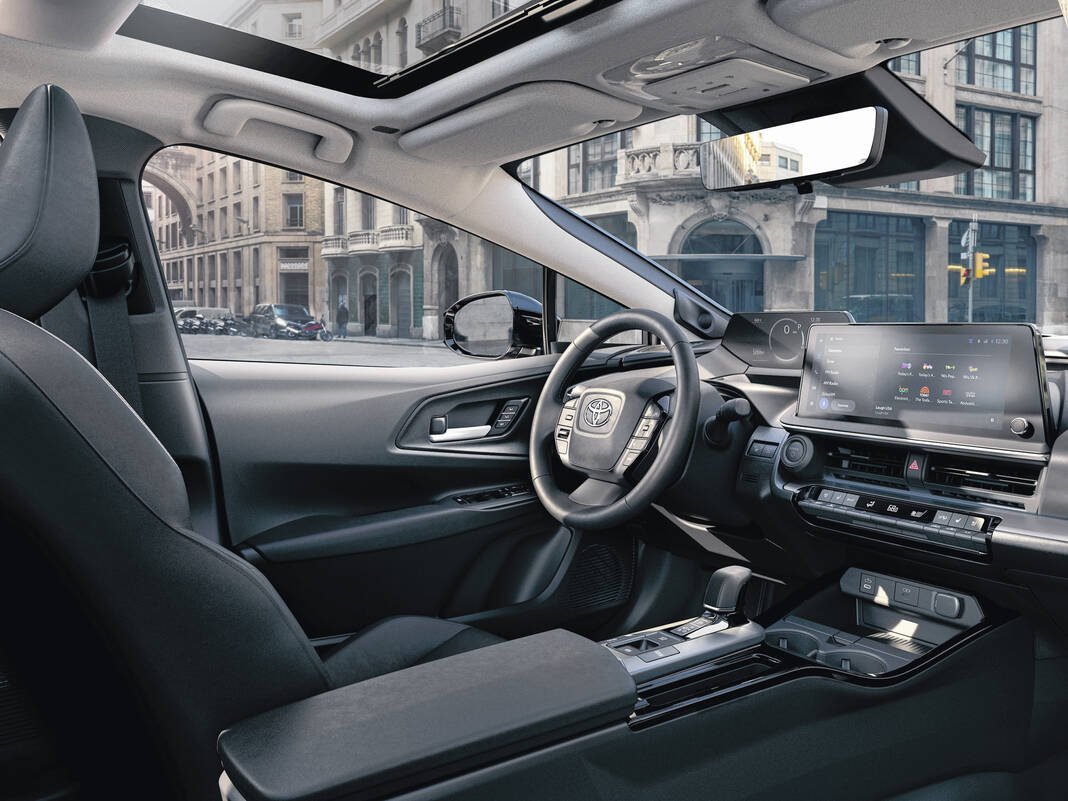
Step inside the 2026 Prius, and you'll find an interior that finally matches its exterior ambition. The traditional cockpit design puts the driver at the center, with a gauge cluster directly in front of the steering wheel. While some drivers might need to adjust the steering wheel for a clear view of the gauges, the overall layout is modern and intuitive.
Infotainment is handled by either a standard 8.0-inch touchscreen (on LE and XLE trims) or a larger, more immersive 12.3-inch touchscreen (standard on Limited, optional on XLE). Both systems feature "Hey, Toyota" voice control, over-the-air (OTA) updates, wireless Apple CarPlay and Android Auto, and Wi-Fi connectivity. It's a significant upgrade, offering seamless smartphone integration and a connected driving experience.
Space & Practicality: Cargo, Headroom, and Real-World Living
The sleek new design does have some practical implications. While the front seats are comfortable and offer ample space, the low roofline slightly impacts rear headroom, particularly for taller passengers. It's not cramped, but it's something to consider if you frequently ferry adults in the back.
Cargo capacity is respectable for a car of its class:
- LE Trim: 23.8 cubic feet behind the rear seats.
- XLE/Limited Trims: 20.3 cubic feet behind the rear seats.
The difference comes down to the inclusion of a spare tire in the LE versus a tire repair kit in higher trims, freeing up a bit more space.
Safety & Driver Assistance: Peace of Mind on Every Journey
Toyota has made a strong commitment to safety, and the 2026 Prius reflects this with a generous suite of standard driver-assistance features. These include:
- Blind-spot monitoring: Alerts you to vehicles in your blind spots.
- Rear-cross-traffic alert: Warns you of approaching traffic when backing out of a parking space.
These features, combined with Toyota's robust construction, contribute to a high level of passenger protection.
Prius Prime: The Plug-In Power-Up
For those looking to push efficiency even further, or who have access to charging at home or work, the Prius Prime is an enticing option. This plug-in hybrid electric vehicle (PHEV) variant offers:
- Significant EV Range: An impressive 40-45 miles of all-electric range, allowing many commuters to handle their daily driving without using a drop of gasoline.
- More Power: The Prime typically boasts slightly more horsepower than the standard Prius, adding an extra dash of acceleration.
- Pricing: Expect to pay roughly a $5,000 premium over a comparable standard Prius trim, but this can often be offset by fuel savings and potential federal or local incentives.
The Prius Prime offers the best of both worlds: zero-emission commuting for shorter trips and the peace of mind of a hybrid powertrain for longer journeys.
Which Prius Generation is Right for You? A Buyer's Guide
Deciding which Prius generation suits your needs depends heavily on your priorities: budget, style, features, and how you value the latest technology versus proven reliability.
For the Value Seeker & Purist: Earlier Generations (1st, 2nd, 3rd Gen)
- Priorities: Unbeatable reliability, lowest initial cost, pure efficiency without frills.
- Why they might be for you: These generations are workhorses. They're legendary for their longevity and low running costs. You'll find these on the used market at very attractive prices, making them excellent choices for a secondary vehicle, a first car, or for drivers who simply want dependable, high-MPG transportation without a significant investment. Their hybrid systems are proven, and maintenance is generally straightforward.
- Considerations: Expect older infotainment, fewer advanced safety features, and a driving experience that leans heavily towards comfort over sportiness. Design is functional rather than fashionable.
For the Balanced Buyer: Mid Generations (3rd, 4th Gen)
- Priorities: Improved features, better driving dynamics than older models, still great fuel economy, a more modern feel without the brand-new price tag.
- Why they might be for you: The third generation offers a sweet spot of refinement and efficiency. The fourth generation, especially on the TNGA platform, brings a noticeable upgrade in ride and handling. You get more modern conveniences, potentially better sound insulation, and a design that, while possibly polarizing in the fourth gen, is certainly more contemporary than its predecessors. These are excellent choices for families or commuters who want a more complete package but aren't ready to splurge on the very latest.
- Considerations: You might miss out on the absolute latest in infotainment screens or the most cutting-edge active safety tech. The fourth gen's design may not appeal to everyone.
For the Style & Performance Aficionado: The Latest Generation (5th Gen / 2023-Present)
- Priorities: Striking design, engaging driving experience, cutting-edge technology, top-tier fuel economy, advanced safety.
- Why it's for you: The 2026 Prius is a revelation. If you want a hybrid that looks good, is genuinely fun to drive, and doesn't compromise on efficiency or technology, this is your choice. It's perfect for drivers who want to make a statement, appreciate modern interior design, and desire the latest safety and infotainment features. The available AWD makes it practical in varied climates, and the Prius Prime option offers unparalleled flexibility for eco-conscious drivers.
- Considerations: This is the most expensive generation, though its value proposition is strong. The lower roofline might slightly impact rear passenger headroom.
Key Decisions When Buying Any Prius
Once you've narrowed down a generation, a few other factors come into play:
Drivetrain: FWD vs. AWD
- Front-Wheel Drive (FWD): Standard on most models, offering the best possible fuel economy. Ideal for drivers in mild climates or those who don't anticipate needing extra traction.
- All-Wheel Drive (AWD): Available on the latest generations, adding a permanent-magnet electric motor to the rear axle. This provides enhanced grip in slippery conditions (snow, rain) without a significant hit to fuel economy, especially on the latest models. If you live in an area with harsh winters or frequently drive on unpaved roads, AWD is a worthwhile upgrade.
Trim Levels: Balancing Features and Value
Toyota typically offers several trim levels, and the differences can be substantial. For the 2026 model:
- LE: A reasonable pick for saving money and maximizing gas mileage. It comes with a solid list of standard features, including 17-inch wheels and crucial safety tech.
- XLE: Often considered the sweet spot. It's worth the added cost for its larger 19-inch wheels (enhancing aesthetics and handling), wireless phone charger, comfortable faux-leather upholstery, heated seats and steering wheel, and convenient rain-sensing wipers.
- Limited: The top-tier trim, offering the most luxurious features, often including the larger 12.3-inch infotainment screen, premium audio, and additional driver-assistance features.
Always compare the features of each trim to your budget and needs.
Warranty and Maintenance
Toyota provides a robust warranty package, particularly for its hybrid components. For the 2026 Prius, you get above-average included maintenance for a set period, which can save you money in the initial years of ownership. The hybrid component warranty is generally industry-standard, offering peace of mind for the heart of the vehicle. When buying used, always check the remaining warranty coverage, especially for hybrid battery components.
The Enduring Appeal of the Prius: What's Next for You?
The Toyota Prius has been on an incredible journey, transforming from a quirky pioneer to a segment-defining icon, and now, to a genuinely desirable and capable vehicle that defies its former image. The latest generations, particularly the 2026 model, prove that you no longer have to sacrifice style or performance for outstanding fuel economy.
Whether you're looking for an ultra-affordable, reliable used hybrid from an earlier generation, or you're ready to embrace the sleek design and energetic drive of the newest model, the Prius family offers something for nearly every driver. Take the time to consider your priorities, explore the options, and you'll find a Prius that's perfectly suited to your next adventure on the road.